Egg-News

Editorial


EU Industry Calls for Acceptance of Vaccination Against HPAI for International Trade

Gert Jan Oplaat, president of the AVEC, the Association of European Poultry Producers (essentially the equivalent of USPOULTRY and the USAPEEC combined) recently called for international coordination on control of HPAI including vaccination in accordance with the recommendations and policies of the World Organization of Animal Health (WOAH).


Oplaat, a leader of his native Dutch poultry organization emphasized, “The pandemic status of HPAI with outbreaks of H5N1 clade 2.3.4.4.b has continued for over the past four years”.  He correctly drew attention to the financial impact of mass depopulation, escalation in the cost of products to consumers and the potential risk to public health following the possible emergence of a zoonotic strain.  Current stamping-out campaigns are regarded as a “waste of resources” and the approach is antithetical to sustainability, welfare and a favorable public perception of the poultry industry.
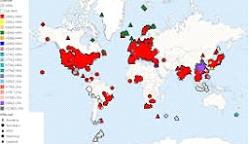
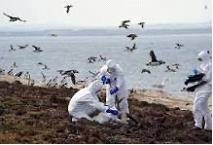
A number of nations have implemented vaccination as a prevention and control measure supplementing biosecurity and quarantine.  EGG-NEWS recently commented on the successful reduction in the incidence of outbreaks of HPAI within the foie gras industry of France.  Farmers operate in close proximity often with defective biosecurity, allow outside access of flocks creating susceptibility by exposure to HPAI infection from migratory birds and by wind-borne dissemination of virus.  Our southern neighbor has employed vaccination as a control strategy to reduce the spread and economic consequences of uncontrolled HPAI. China has deployed vaccination for over a decade to limit flock infection and to reduce exposure to consumers through wet markets.


The current restraints to deploying commercially available and effective vaccines relate not to efficacy but to the reality of trade sanctions. Effective vaccines to protect flocks against H5N1 HPAI include live vectored products for mass immunization and inactivated oil emulsion DIVA vaccines for parenteral administration.


Stamping-out has failed to eliminate the endemic status of HPAI in Europe and North America. The infection is introduced by migratory and marine waterfowl and disseminated by contact with free-living birds and the aerogenous route. This has raised questions as to the validity of current control measures. Regulators in importing nations have been slow to accept the benefits of vaccination, adhering to traditional pre-panornitic regulations. The representations by AVEC reflect the realities of trade restrictions that are now anachronistic and epidemiologically invalid given available programs of surveillance and certification.  Oplaat correctly states that “HPAI is not only a trade issue, it is a long-term structural challenge for animal health, sustainability and credibility.”
The EU will produce 11.970 million metric tons of RTC chicken in 2026.  Of this total, 1.720 million metric tons or 14 percent will be exported.  This figure is offset by imports of 0.8 million metric tons, principally from Brazil, Ukraine and Thailand.  Corresponding figures for the U.S. comprise 22.090 million metric tons of RTC broiler production in 2026 with 3.052 million metric tons exported representing 13.8 percent of production. 


AVEC recommends the following approach to vaccination: -

  • Targeted application to high-risk species including ducks, turkeys and long-lived egg production and breeder flocks.
  • Concentration on regions demonstrating a history of reoccurring seasonal outbreaks.
  • Implementation of accepted epidemiologically sound surveillance protocols.
  • Selection of vaccines based on efficacy and incorporating the DIVA principle.
  • Transparent sharing of data.
  • Conformity to WOAH standards regarding vaccine quality, monitoring of immunity and reporting outbreaks.
  • Acceptance of vaccination with surveillance and certification by the World Trade Organization that should suppress unjustified import restrictions to protect domestic industries.


Ultimately vaccination will be accepted but to facilitate the process, AVEC recognizes the need for common standards supported and promoted by the International Poultry Council (IPC) and the World Egg Organization.  Setting aside competition among exporting nations, dialog is essential to establish uniform standards and regulations relating to vaccines, vaccination, surveillance, certification and reporting, all in conformity with WOAH directives.  It is evident that the IPC should serve as a coordinating body and establish leadership.  To date HPAI has not been a major problem in the broiler industries of the U.S. and Brazil, the world’s leading exporters.  Both nations have maintained production and trade despite heavy losses in the U.S. duck, turkey and egg production sectors.


Oplaat correctly states that a coordinated program of controlled vaccination would send a signal to manufacturers of biologics to invest in both research and production capacity to supply the resulting demand for avian influenza vaccines.  The biopharmaceutical industry has been constrained by a patchwork of regulations and evident hostility towards immunization based on scientifically unsubstantiated fears of obstruction to export of raw chicken and turkey products.


Until the emergence of genotype-VI avian paramyxovirus, clinical Newcastle disease was successfully prevented by application of a range of live and inactivated vaccines. Avian influenza is effectively the “Newcastle disease of the 2020s” since it represented as much of a challenge in the 1970s to production and trade as HPAI in the 2020s. 


AVEC has taken the initiative to motivate a collective approach to regulating vaccination to prevent outbreaks of avian influenza in the interest of poultry producers, consumers and public health. The organization is actively advocating for the abolition of unjustified trade restrictions. It is now up to the IPC and IEC following the AVEC lead, to remove restrictions limiting tactical application of immunization of high-risk poultry segments in historically affected regions.


Egg Industry News


USDA Cage-Free Production Data for February 2026

The USDA Cage-Free Report covering February 2026, was released on March 2nd 2026.


The report documented the complement of hens producing under the Certified Organic Program to be 21.0 million (rounded to 0.1 million), up 20,000 hens or less than 0.1 percent from January 2026. The number of hens classified as cage-free (but excluding Certified Organic) and comprising aviary, barn, free range and other systems of housing apparently increased by 3.9 million hens or 3.2 percent from January 2026 to 125.7 million, attributed to expansion, transition from conventional cages and repopulation of depleted flocks.


Extensive depopulation was carried out as a result of HPAI through January and February 2025 (31 million), but with lower intensity in March (0.2 million) and April (1.0 million) and a single large complex in Arizona during May (3.8 million). Losses reemerged during late September in a caged-bird complex in Wisconsin (3.1 million hens and 250,000 pullets). Additional depopulation occurred in October, (2.2 million); November, 0.5 million; December, (0.2 million); January 2026 (1.5 million) and February (5.0 million).


Average weekly production for Certified Organic eggs in February 2026 was up less than 0.1 percent (rounded) compared to January 2026 with a high average weekly production of 83.7 percent. Average weekly flock production for cage-free flocks other than Certified Organic was up 3.0 percent in February 2026, with a high average hen-month production of 82.4 percent. Seasonally placed flocks in anticipation of periods of peak demand increase the availability of cage-free and organic eggs, reflecting pullet chick placements 20 weeks previously.


There is no adequate explanation for the elevated production rates recorded other than the high proportion of young hens reaching peak placed in anticipation of December demand. It is also assumed that almost all cage free flocks are in the first cycle of production with negligible molting contributing to the high average in hen-week values compared to caged hens.


According to the USDA Egg Markets Overview and data from the weekly USDA Shell Egg Demand Indicator, the categorization of U.S. flocks according to housing system among the total of 307.9 million total hens as of February 2026 comprised:-

Caged, 161.2 million (52.3% of total flock);

Cage Free (non-organic), 125.7 million (40.8% of total flock) with 82.7% of this population in barns, 7.6% on free-range and 9.7% on pasture;

Cage Free (organic), 21.0 million (6.8%) with 56.7% of this population in barns and 21.4% on free-range and 21.9 on pasture: or other extensive systems


Losses attributed to HPAI in 2025 comprised:-

Caged flocks, 24.8 million representing 8.4 percent of a nominal 290 million producing hens

Cage-free flocks, 17.6 million representing 5.9 percent of the national flock

Organic flocks, negligible, >0.1 percent


Through the first two months of 2026, hen losses attained 5.9 million in cages and 1.9 million housed in alternative systems.

Average Flock Size

(million hens)

 Average

February 2025

*Average

Q3- 2025

Average

Q2- 2025

Average

Q1 –

2025

Average

Q4 –

2024

Average

Q3-

2024

Certified Organic

21.0

20.0

20.0

 20.4

20.5

20.0

Cage-Free Hens

125.7

115.6

108.4

103.4

 104.5

 103.9

Total Non-Caged

146.7

135.6

128.4

123.8

 125.0

 123.9

 *October and November data was not released to compile Q4 average

Average Weekly Production (cases of 360 eggs)

January

2026

February

2026

Certified Organic @ 83.7% hen/day

341,966

342,042 - 0.1%

Cage-Free @ 82.4% hen/day

 1,955,847

2,013,939 +3.0%

All Non-Caged @ 82.6% hen/day

 2,355,981

2,355,981 +2.5%


 On March 2nd 2026 USDA recorded the following National inventory levels expressed in 30-dozen cases (rounded) with the change from January 2026 as a percentage of the total quantity of eggs:-

Commodity shell eggs of all sizes. 1,542,200. (+10.5%)

Commodity breaking stock. 330,400. (-8.4%)

Specialty eggs. 45,100. (+39.1%)

Certified organic eggs. 88,000. (+8.5%)

Cage-Free eggs 461,400. (+5.2%) equivalent to 1.6 days production

Average Nest Run Contract Price Cage-Free

 White and Brown combined for February 2026

$1.73/doz.* (unchanged from May 2025)

February 2025 Range:

$1.55 to $2.10/doz. (unchanged from May 2025)

FOB Negotiated February price, grade-ready quality, loose nest-run. Price range $0.38 to $0.55 per dozen

Average February 2026 Value of $0.57/doz. ($0.63/doz. January 2026)

*Essentially a meaningless value

Average February 2026 advertisedpromotional National Retail Price C-F, Large Brown

$3.67/doz. February 2025 (6 regions)

(Was $3.45/doz. In January 2026)

USDA Based on 6 ‘Lower 48’ Regions, 1,405 stores

SW, NW, NE, SE, MW & SC.

Range $3.49/doz. (SW) to $3.99/doz. (NW)

Negotiated nest-run grade-ready cage-free price for February 2026 averaged $0.59 per dozen, up $0.16 per dozen (+37.2 percent) from $0.43 per dozen in January 2026, reflecting a disturbance in balance between demand and supply.

The February 2026 advertised U.S. featured retail price for Large White cage-free eggs over 1,620 ‘Lower 48’ stores in six regions (NW, NE, SE, SW, MW and SC.) was $2.66 per dozen. This compares with 1,424 stores featuring cage-free Large White in January and reflects more promotions as the year has progressed, consistent with lower demand and increased production. The February 2026 advertised U.S. featured retail price for Large Brown cage-free eggs over 1,405 stores in six regions was $3.67 per dozen with a range of $3.49 per dozen in the SW region to $3.99 per dozen in the NW region. The average promotional shelf price was 22 cents per dozen above January 2026 for this category

The recorded average gradeable nest run price of $0.59 per dozen for brown and white cage-free combined plus a provision of $0.60 cents per dozen for packaging, packing and transport, resulted in a theoretical price of $1.19 per dozen delivered to CDs. The average advertised promotional retail prices of $3.67 per dozen for Brown and $2.66 per dozen for white represented retail margins of 208 percent for featured Brown and 123 percent for White respectively. Fewer promotions were offered for Brown compared to White-shelled cage-free by stores reflecting the balance between supply and demand for the two broad categories. Margins are presumed higher for non-featured eggs including pastured and other specialty eggs at shelf prices attaining in excess of $8.00 per dozen in high-end supermarket chains. Retailers are maximizing margins especially on Certified Organic, free-range and pastured categories restricting the volumes of sales, of all categories ultimately disadvantageous to producers and consumers.


Cal-Maine Foods Acquires Creighton Brothers

In a March 2nd release, Cal-Maine Foods (CALM) announced acquisition of the assets of Creighton Brothers LLC, for $129 million.

Creighton Brothers was established in 1925 and operates egg production facilities including pullet and layer housing, egg packing installations. A subsidiary, Crystal Lake LLC, manufactures and distributes further-processed egg products.


Creighton Brothers houses 3.2 million hens of which 14 percent are cage-free in addition to 900,000 pullets, with a feed mill, egg packing and processing facilities and 1,000 acres of land near Warsaw, IN.


The acquisition represents a unit price of $36 per hen although it is noted that additional capital will be required to increase the proportion of hens in other than conventional cages, should this be required.


Sherman Miller, CEO of Cal-Maine Foods noted, “The acquisition of Creighton Brothers and Crystal Lake advances our strategy by expanding the scale and geographic reach of our shell egg platform across both specialty eggs and conventional eggs adding meaningful growth to our portfolio.”  He added, “Importantly, we further our internal sourcing strategy for key egg-based ingredients for our prepared foods business-strengthening supply security, improving margins and driving greater operational efficiency.”


Mindy Truex, president of Creighton Brothers and Crystal Lake, stated, “With mixed personal emotions and great pride, I am excited to see the legacy of Hobart and Russell Creighton and their families continue and grow with the new family at Cal-Maine.”  


DXE Releases Map of Livestock and Poultry Installations in California

Direct Action Everywhere (DXE) recently released an interactive online map of California  indicating the location of animal production facilities they characterized as “factory farms and slaughterhouses”.  This action may be a precursor of activities similar to the 2020 “Project Counterglow” that encouraged protesters to gather at farms and plants. 


By identifying production facilities, their vulnerability to intrusion and protests has increased. It is possible that there are relatively fewer DXE activists willing to risk arrest and legal action following the Sonoma County conviction of Zoe Rosenberg. Unless the organization focuses on specific segments of the industry or designated locations, the mapmaking initiative has probably been a make-work exercise that will have little actual impact on production. 


Notwithstanding the anticipated response to the interactive map, producers and processors should review the security of their flocks, herds, facilities and employees. Close communication should be maintained with local law enforcement agencies. Appropriate contingency plans and legal counter-measures should be developed in advance of any possible DXE action.


Target Corporation Posts Q4 and FY2025 Results

On March 3rd Target Corporation (TGT) the Nation’s 6th-ranked retailer, posted results for Q4 and FY 2025 ending February 1st, beating the earnings estimate of $2.16 and conforming to the sales estimate.  For the quarter, the Company earned $1,046 million on sales of $30,453 million with a diluted EPS of $2.30. For the corresponding Q4 FY 2024 ending February 1st, Target earned $1,103 million on sales of $30,915 million with a diluted EPS of $2.41. Revenue was down by 1.5 percent and net earnings were down 5.2 percent compared to Q4 FY 2024. Gross margin increased from 26.2 percent in Q4 FY2024 to 26.6 percent for the most recent quarter due to lower inventory shrinkage. Operating margin fell from 4.7 percent to 4.5 percent.


For FY 2025, the Company earned $3,705 million on sales of $104,780 million with a diluted EPS of $8.13. For the previous FY 2024 Target earned $4,091 million on sales of $106,566 million with a diluted EPS of $8.86


For Q4 FY 2025, comparable same-store sales declined by 2.5 percent compared to a positive 1.5 percent in Q4 FY 2024. The company recorded a 2.9 percent decline in transactions (‘traffic’) partly offset by a 0.4 percent increase in the value of each transaction (‘ticket’). Digital sales were up 23.7 percent during Q4 FY 2025.


The Company continued with the Target Circle a free loyalty benefits program replacing the previous paid membership alternative with an increase in membership of 30 percent.


In commenting on results Michael Fiddelke, CEO stated, “I'm incredibly proud of how our team navigated through a challenging year in 2025, as they focused on serving our guests while positioning our business for profitable growth in 2026 and beyond," He added "Our team is firmly focused on writing Target's next chapter of growth, rooted in strengthening our merchandising authority, delivering an elevated and differentiated shopping experience, advancing our use of technology, and continuing to serve and invest in our team and communities”.  Fiddelke concluded “Target saw a healthy, positive sales increase in February, serving as an important milestone on our path back to growth this year, and reinforcing my confidence in the momentum we're building and the future we're creating together."


The Company raised guidance for fiscal 2026. Target expects a two percent increase in same-store sales growth and an adjusted EPS ranging from $7.50 to $8.50


At the Analysts’ meeting Target unveiled its multi-year strategy under CEO Michael Fiddelke intended to accelerate return to growth. This will include upgrading the ‘store experience’ across the chain, investing in store payroll and training and improving service and consumer satisfaction.


Michael Fiddelke stated "This new chapter of growth at Target is defined by clear choices and rooted in a deeper understanding of our unique lane in retail, the guests we serve and the areas where we're distinctly positioned to win," He added, "This work is underway, and by putting style, design and value at the center of every decision, we're making big changes to lead with a trend-forward assortment, elevate the guest experience, accelerate with technology and equip our teams to deliver the most delightful experience in retail, for today and over the long term."


The four growth priorities that will guide decisions and investments in 2026 and beyond will involve:-

  • Merchandizing to set trends with differentiated, culturally relevant assortments offering style, design and value.
  • Improving the in-store experience through strengthening loyalty and engagement.
  • Accelerating technology to help teams become more efficient and to create more personalized experiences for guests.
  • Strengthening teams and communities by investing in training and career growth and building on Target's long-standing commitment to communities.


Target intends to invest $2 billion out of a $5 billion capital budget on upgrades to stores including featuring Target brands and upscale cosmetics counters


On January 31st 2025 Target posted total assets of $59,490 million, up 3.0 percent from February 1st 2024. Long-term debt and lease obligations attained $19,830 million. Target Corporation had an intraday market capitalization of $54,700 million on March 4th. The Company has traded over the past fifty-two weeks over a range of $83.46 to $126.00 with a 50-day moving average of $107.98.  TGT trades with a forward P/E of 15.5. On March 3rd pre-release the share priced at  $111.00 but after the morning release opened at $118.30 and closed at $119.60


Twelve-month trailing operating margin was 4.5 percent and profit margin 3.5 percent.  The Company generated a return on assets of 5.8 percent and 24.0 percent on equity.


Dr. Simon M. Shane
Simon M. Shane
Contact     C. V.


Managed by Goosedown Web Development